<?xml version="1.0" encoding="UTF-8"?>
<feed xmlns="http://www.w3.org/2005/Atom">
    <title>Neil Cossar - The Morton Report</title>
    <link rel="alternate" type="text/html" href="http://www.themortonreport.com/" />
    <link rel="self" type="application/atom+xml" href="http://www.themortonreport.com/writer/neil-cossar/atom.xml" />
    <id>tag:www.themortonreport.com,2011-10-04://1</id>
    <updated>2013-01-10T03:05:22Z</updated>
    <subtitle>Where Popular Culture Meets Swanky Living</subtitle>
    <generator uri="http://www.sixapart.com/movabletype/">Melody 1.0.1</generator>

<entry>
    <title>Ladies and Gentlemen, the Greatest Rock and Roll Band in the World: The Rolling Stones!</title>
    <link rel="alternate" type="text/html" href="http://www.themortonreport.com/entertainment/music/ladies-and-gentlemen-the-greatest-rock-and-roll-band-in-the-world-the-rolling-stones/" />
    <id>tag:www.themortonreport.com,2013://1.9065</id>

    <published>2013-01-10T02:10:00Z</published>
    <updated>2013-01-10T03:05:22Z</updated>

    <summary>This Day In The Rolling Stones brings you daily Stones events for 366 days of the year: gigs, TVs, recording, charts and more, plus in-depth song notes for 15 classic Stones albums.</summary>
    <author>
        <name>Neil Cossar</name>
        <uri>http://www.thisdayinmusic.com/</uri>
    </author>
    
        <category term="Apps &amp; Gadgets" scheme="http://www.sixapart.com/ns/types#category" />
    
        <category term="Entertainment" scheme="http://www.sixapart.com/ns/types#category" />
    
        <category term="Music" scheme="http://www.sixapart.com/ns/types#category" />
    
    <category term="apps" label="apps" scheme="http://www.sixapart.com/ns/types#tag" />
    <category term="ipad" label="ipad" scheme="http://www.sixapart.com/ns/types#tag" />
    <category term="iphone" label="iphone" scheme="http://www.sixapart.com/ns/types#tag" />
    <category term="rollingstones" label="rolling stones" scheme="http://www.sixapart.com/ns/types#tag" />
    <category term="thisdayintherollingstones" label="this day in the rolling stones" scheme="http://www.sixapart.com/ns/types#tag" />
    
    <content type="html" xml:lang="en" xml:base="http://www.themortonreport.com/">
        <![CDATA[<p>Undoubtedly one of most influential acts ever, the history of The Rolling Stones brings you everything that is rock and roll &#8212; and more. When The Rolling Stones began playing gigs around London in 1962, the notion that a rock and roll band would last five years, let alone 50, was an absurdity.</p>

<p>Their songs have always maintained a grip on the zeitgeist, and their
live shows are second to none. The recent shows in the US and the UK made headlines everywhere.</p>

<p>From "Come On," "I Wanna Be Your Man," "Satisfaction," "Honky Tonk Women" and
all the way to this year&#8217;s "Doom and Gloom," the Stones have brought us
landmark recordings which are now embedded in pop culture.</p>

<p>This new iPhone and iPad app captures 50 years of Stones history very neatly indeed. In the various sections within the app, you can see every gig they've ever played, recording dates, drug busts (there have been a few), and band members coming and going as the app takes you through Stones history.</p>

<p>Other sections include a scored quiz, a trivia section, and links to all the band's members sites. The app also digs deep into 15 essential Stones albums, including <i>Beggars Banquet</i>, <i>Sticky Fingers</i>, <i>Exile on Main Street</i>, <i>Some Girls</i>, and more &#8212; right through to the current hits release <i>GRRR!</i> &#8212; detailing how the songs were written and recorded. (Did you know that "Jumpin' Jack Flash" was named after Keith Richards' gardener, Jack Dyer?)</p>

<p>See the app in action:</p>

<iframe src="http://www.youtube.com/embed/NduPW9yWEAE?rel=0" allowfullscreen="" frameborder="0" height="214" width="380"></iframe>]]>
        
    </content>
</entry>

<entry>
    <title>This Day in Music - 29th February: Sgt. Pepper</title>
    <link rel="alternate" type="text/html" href="http://www.themortonreport.com/entertainment/this-day-in-music-29th-february-sgt-pepper/" />
    <id>tag:www.themortonreport.com,2012://1.3062</id>

    <published>2012-02-29T15:50:00Z</published>
    <updated>2012-02-29T16:51:36Z</updated>

    <summary> On this day February 29th in 1968, The Beatles Sgt. Pepper&apos;s Lonely Hearts Club Band won Album of the Year, Best Cover and Best Engineered and Recorded Album at that year&apos;s Grammy Awards. The greatest album ever? The best...</summary>
    <author>
        <name>Neil Cossar</name>
        <uri>http://www.thisdayinmusic.com/</uri>
    </author>
    
        <category term="Entertainment" scheme="http://www.sixapart.com/ns/types#category" />
    
        <category term="Featured Columns" scheme="http://www.sixapart.com/ns/types#category" />
    
        <category term="Music" scheme="http://www.sixapart.com/ns/types#category" />
    
        <category term="This Day In Music" scheme="http://www.sixapart.com/ns/types#category" />
    
    <category term="adayinthelife" label="A Day In The Life" scheme="http://www.sixapart.com/ns/types#tag" />
    <category term="sgtpepper" label="Sgt. Pepper" scheme="http://www.sixapart.com/ns/types#tag" />
    <category term="thebeatles" label="The Beatles" scheme="http://www.sixapart.com/ns/types#tag" />
    <category term="thisdayinmusic" label="This Day in Music" scheme="http://www.sixapart.com/ns/types#tag" />
    
    <content type="html" xml:lang="en" xml:base="http://www.themortonreport.com/">
        <![CDATA[


<p>On this day February 29th in 1968, The Beatles <i>Sgt. Pepper</i>'s <i>Lonely Hearts Club Band</i> won Album of the Year, Best Cover and Best Engineered and Recorded Album at that
year's Grammy Awards.</p>

<p>The greatest album ever? The best Beatles album? Well that's
all subjective, and we're all entitled to our own opinion, but in mine, it is
neither. I would argue that <i>Revolver</i> is a better album, as is <i>Abbey Road</i>. But
that's just my view and one thing is for sure, <i>Sgt. Pepper</i> is undoubtedly one
of the greatest albums of all time and saw The Beatles rising to new peaks of
songwriting. <i>Sgt. Peppers</i> blew our minds when released in June of 1967; it
captured British culture, flower power and the feelings of a young and exited
generation.</p><p></p>

<p>So, what can be said about <i>Pepper</i> that hasn't been said
before? Lets dig deep and see if we can unearth some of the lesser-known facts
that helped make-up this masterpiece.</p><p></p>

<p>The songs: &#8220;When I&#8217;m 64&#8221; became the first track to be
recorded for the album, with the first session taking place on 6th Dec
1966. The song which was first hatched
during The Beatles days in Hamburg was supposedly reworked that autumn by Paul
because his father was approaching - 64.</p><p></p>

<p>Lennon's "Lucy in the Sky with Diamonds" was
inspired by a drawing his 3 year-old son Julian returned home from school with
one day. The picture, which was of a little girl with lots of stars, was his
classmate - Lucy O&#8217;Donnell, who also lived in Weybridge, and attended the same
school as Julian. When the album was released, both the press and fans insisted
the song was instead about Lennon's many LSD trips, after all the title gave it
away.</p><p></p>

<p>George Harrison has only one song on the album, "Within
Without You", but there should have been a second. The quiet one's &#8220;Only a
Northern Song&#8221;, was intended for inclusion right up to the moment that
McCartney decided to reprise the title track. One of Harrison&#8217;s bitterest Beatle
songs, it was a dig at the band&#8217;s publishing company, and the ostensible
concept (an album of &#8216;northern songs&#8217;) McCartney hoped to impose on the
project.&nbsp;</p><p></p>

<p>The lyrics for Lennon's song "Being for the Benefit of
Mr. Kite!", were inspired and re-worked from a Victorian circus poster for
Pablo Fanque's circus, which Lennon had bought at an antique shop in Kent when
he was taking a break from filming the promotional clip for "Strawberry
Fields Forever".</p><p></p>

<p>And what of the closing track, "A Day in the
Life". The thunderous piano chord that concludes the album, was produced
by assembling three grand pianos in the studio and playing an E chord on each
simultaneously. Together, John, Paul and Ringo with the help of assistant Mal
Evans hammered the keys on the pianos to create the effect.&nbsp;</p><p></p>

<p>The orchestral recording sessions for "A Day in the
Life", were filmed by six cameramen, the footage was planned to be used for
a&nbsp; Sgt. Pepper television special. The
idea was to included all the songs from the album set to music in video style
scenes, again The Beatles were well ahead of their time, but the plans were
shelved and the footage eventually surfaced in T<i>he Beatles Anthology</i>
documentary.</p><p></p>

<p>Another hard to believe fact is that the album was mixed in
mono because very few people in 1967 had stereo record players, (stereo was
strictly for hi-fi nuts) and to prove the point, none of the Beatles attended
the sessions for the stereo mixes. (On certain versions of vinyl and even CD
pressings, if you listen with the balance turned to just one speaker, you hear <i>Pepper</i> like you've never heard it before; missing backing vocals, no drums
and guitars missing from the mix).&nbsp;</p><p></p>

<p>You could write an article on the sleeve itself! The cover
was created by Jann Haworth and Peter Blake who won the Grammy Award for Best
Album Cover.&nbsp; Over 60 famous
figures feature on the cover, from musicians, actors, politicians and writers.
A model of Jesus was planned for inclusion but didn't make it, (the LP was
released only a few months after Lennon's Jesus statement, and they didn't want
to stir that one up again). There are nine Beatles on the cover including ex
Beatle Stuart Sutcliffe.</p><p></p>

<p>And what of that bit of gibberish that we all found
ourselves listening to over and over again as the needle was stuck in the groove
at the end of side two? (You see we miss all this fun in the digital age).
According to the June 1967 <i>Beatles Monthly</i>, this tape-loop was &#8216;just a bit of
jabbering conversation by the lads themselves which was speeded up. When
curiosity got the better of some fans, they decided to play their LP backwards
- and found it appeared to say, &#8216;We&#8217;ll fuck you like Superman.&#8217;</p><p></p>

<p>And all this magic was recorded over 129 days using 4-track
recording machines. The fabs, laid down their parts on what was then becoming
outdated studio equipment, (some studios in the US already had 8-track
machines), guided and encouraged by the fifth Beatle, producer George Martin.
New techniques were used and invented during these sessions. ADT, (automatic
double tracking) was used because Lennon hated having to 'track' his vocal,
(ADT then became a universal studio feature). They slowed and speeded up the
tapes using varispeed to give them a thicker and unique sound.</p><p></p>

<p>And just to prove how prolific these Northern lads were, the
first fruits of this exercise, "Penny Lane" and "Strawberry
Fields Forever", didn't even make it on to the album but instead were
released as the double A-sided single in February 1967 after EMI had pressured
The Beatles for a single release.</p><p></p>

<p>There is no-other way to describe Sgt. Pepper but as a
masterpiece.&nbsp;</p><p></p>


<object height="320" width="380"><param name="movie" value="http://www.youtube.com/v/4xljFT44Y1Y?version=3&amp;hl=en_US"><param name="allowFullScreen" value="true"><param name="allowscriptaccess" value="always"><embed src="http://www.youtube.com/v/4xljFT44Y1Y?version=3&amp;hl=en_US" type="application/x-shockwave-flash" allowscriptaccess="always" allowfullscreen="true" height="320" width="380"></embed></param></param></param></object>

]]>
        
    </content>
</entry>

<entry>
    <title>This Day in Music, February 28: Oh Mercy</title>
    <link rel="alternate" type="text/html" href="http://www.themortonreport.com/entertainment/music/this-day-in-music-february-28-oh-mercy/" />
    <id>tag:www.themortonreport.com,2012://1.3058</id>

    <published>2012-02-28T05:00:00Z</published>
    <updated>2012-02-27T19:46:56Z</updated>

    <summary>When released it was hailed by critics as a triumph, and the fans agreed. Oh Mercy gave Dylan his best chart showing in years, reaching No. 30 on the Billboard charts in the United States and No. 6 in the UK.</summary>
    <author>
        <name>Neil Cossar</name>
        <uri>http://www.thisdayinmusic.com/</uri>
    </author>
    
        <category term="Entertainment" scheme="http://www.sixapart.com/ns/types#category" />
    
        <category term="Featured Columns" scheme="http://www.sixapart.com/ns/types#category" />
    
        <category term="Music" scheme="http://www.sixapart.com/ns/types#category" />
    
        <category term="This Day In Music" scheme="http://www.sixapart.com/ns/types#category" />
    
    <category term="bobdylan" label="Bob Dylan" scheme="http://www.sixapart.com/ns/types#tag" />
    <category term="daniellanois" label="Daniel Lanois" scheme="http://www.sixapart.com/ns/types#tag" />
    <category term="ohmercy" label="Oh Mercy" scheme="http://www.sixapart.com/ns/types#tag" />
    
    <content type="html" xml:lang="en" xml:base="http://www.themortonreport.com/">
        <![CDATA[<p>On this
day in 1989, Bob Dylan recorded the first sessions for the album <i>Oh
Mercy </i>at The Studio, New Orleans, Louisiana. Dylan's 26th
studio album, released by Columbia Records in September 1989, was produced by
Daniel Lanois.</p>

<p>Dylan&#8217;s previous album, <i>Down In The Groove</i>, released a year earlier, had seen disappointing
sales (peaking at No. 61 in the US and No. 32 in the UK), along with unanimous negative reviews. After 25 years
of releasing records, Dylan&#8217;s sales were not good. It appeared that America&#8217;s
finest singer/songwriter had hit a creative slump. The times were indeed
a-changin'.</p>

<p>In late 1987, Bob was
recovering from a hand injury and at home wrote "Political World,"
his first new song in a long time. The singer then had a rush of inspiration
and during the first few weeks of 1988 wrote &#8220;Dignity,&#8221; &#8220;Everything Is Broken,&#8221;
and &#8216;What Good Am I.&#8221; By the second month of the year, Dylan had over 20 new
songs. With his hand injury still healing, he stored all the new songs in a
drawer.</p>

<p>In the spring of '88,
during a US tour with his group U2, Bono paid Dylan a visit at his home. When
he asked Dylan if he had written any new songs, Dylan showed him the ones
stored in his drawer. Bono enthused about them and told Dylan he had to get back
in the studio and start recording. The Irish singer also suggested working with
Canadian producer and Grammy award winner Daniel Lanois, who had produced U2&#8217;s
last two studio albums, <i>The Unforgettable Fire </i>and <i>The Joshua Tree</i>. Bob knew of
Lanois, who had also worked with his one-time collaborator, Robbie Robertson, on
his solo album. (If you&#8217;ve never heard it, check out Lanois&#8217; 1989 solo effort <i>Acadie</i>).</p>

<p>Dylan decided to hire
Lanois and sessions started later in the year in New Orleans. Dylan didn&#8217;t want
to use his tour band for these sessions so local musicians were hired including
guitarists Mason Ruffner and Brian Stoltz, bassist Tony Hall, and drummer
Willie Green as well as Lanois himself who played lap steel, dobro and guitar.</p>

<p>Dylan later stated in
his autobiography that the sessions were at times very difficult. Bob would
lay down a new take of a song and then leave the studio while the producer and
band would continue to work on it. Returning to the studio, Dylan was not
always happy with the results.</p>

<p>Despite all this,
something magical happened during these sessions as the finished album proves.
"Ring Them Bells," "Political World" (which finds him once again in
protest mode), "Where Teardrops
Fall," and &#8220;Everything Is Broken&#8221; (with its wonderful blues shuffle and
blues harmonica) all showed Dylan was well and truly back on form.</p>

<p>The atmospheric production gave the album an edge, and Bob
seemed to have been rejuvenated; maybe working with George Harrison, Roy
Orbison, Tom Petty, and Jeff Lynne in the Traveling Wilburys had helped him
turn a corner. Whatever the reason, America&#8217;s finest singer/songwriter was
back.</p>

<p>When released, it was
hailed by critics as a triumph, and the fans agreed. <i>Oh Mercy </i>gave Dylan his
best chart showing in years, reaching No. 30 on the <i>Billboard</i> charts in the
United States and No. 6 in the UK.</p>

<p>Very few musician have
influenced the music and the culture of their times as Bob Dylan has and every
artist experiences highs and lows during his or her career &#8212; the Rolling Stones,
Springsteen, Lennon, McCartney... everyone. <i>Oh Mercy</i> gave
Dylan and his fans a new lease on life and saw Bob exiting the '80s on a high point.
In my opinion, it is his least
appreciated classic and at times points to what were to become some of his
finest albums: 2006&#8217;s <i>Modern Times</i> and 2009&#8217;s <i>Together Through Life</i>.&nbsp;</p>

 
<object height="320" width="380"><param name="movie" value="http://www.youtube.com/v/m3IXEEckZz4?version=3&amp;hl=en_US"><param name="allowFullScreen" value="true"><param name="allowscriptaccess" value="always"><embed src="http://www.youtube.com/v/m3IXEEckZz4?version=3&amp;hl=en_US" type="application/x-shockwave-flash" allowscriptaccess="always" allowfullscreen="true" height="320" width="380"></embed></param></param></param></object>]]>
        
    </content>
</entry>

<entry>
    <title>This Day in Music, February 27: Arnold Layne</title>
    <link rel="alternate" type="text/html" href="http://www.themortonreport.com/entertainment/music/this-day-in-music-february-27-arnold-layne/" />
    <id>tag:www.themortonreport.com,2012://1.3056</id>

    <published>2012-02-27T05:00:00Z</published>
    <updated>2012-02-26T19:09:07Z</updated>

    <summary>On this day in 1967, Pink Floyd recorded their first single, &#8220;Arnold Layne,&#8221; with producer Joe Boyd at Sound Techniques studio in Chelsea, England. This is where it all began for Pink Floyd.</summary>
    <author>
        <name>Neil Cossar</name>
        <uri>http://www.thisdayinmusic.com/</uri>
    </author>
    
        <category term="Entertainment" scheme="http://www.sixapart.com/ns/types#category" />
    
        <category term="Featured Columns" scheme="http://www.sixapart.com/ns/types#category" />
    
        <category term="Music" scheme="http://www.sixapart.com/ns/types#category" />
    
        <category term="This Day In Music" scheme="http://www.sixapart.com/ns/types#category" />
    
    <category term="arnoldlayne" label="arnold layne" scheme="http://www.sixapart.com/ns/types#tag" />
    <category term="pinkfloyd" label="pink floyd" scheme="http://www.sixapart.com/ns/types#tag" />
    <category term="piperatthegatesofdawn" label="piper at the gates of dawn" scheme="http://www.sixapart.com/ns/types#tag" />
    
    <content type="html" xml:lang="en" xml:base="http://www.themortonreport.com/">
        <![CDATA[<p>On
this day in 1967, Pink Floyd recorded their first single,
&#8220;Arnold Layne,&#8221; with producer Joe Boyd at Sound Techniques studio in Chelsea,
England. "Arnold
Layne" regularly ran for 10 to 15 minutes in concert (with extended
instrumental passages), but the band knew that it had to be shortened for use
as a single.</p>

<p>This is where it all began for Pink Floyd. Spotted by US label Elektra&#8217;s UK
representative Joe Boyd, at London&#8217;s UFO Club,  the label couldn&#8217;t agree on a deal, so Boyd took
them in to his studio of choice, Sound Techniques in London&#8217;s Chelsea, and
produced &#8220;Arnold Layne&#8221;
himself, with a view to starting his own independent label. However, the
recording was paid for by the band&#8217;s agent, Bryan Morrison, so Pink Floyd were
free to go where they liked, which ended up being EMI.</p>

<p>Joe Boyd was vindicated by the release of his production as Pink Floyd&#8217;s
first single, their first hit. EMI&#8217;s designated producer, Norman Smith, apparently
found it difficult to replace the single&#8217;s sound, engineered by Sound
Techniques' co-owner John Wood, and the band returned to Sound
Techniques to cut the follow-up single &#8220;See
Emily Play,&#8221; although this time without Boyd.</p>

<p><a href="http://www.themortonreport.com/arnoldla.jpg"><img alt="arnoldla.jpg" src="http://www.themortonreport.com/assets_c/2012/02/arnoldla-thumb-250x245-15245.jpg" class="mt-image-right" style="float: right; margin: 0 0 20px 20px;" height="245" width="250"></img></a>Pink Floyd&#8217;s debut single and its B side &#8220;Candy and a Currant Bun&#8221; were recorded between
23 January and 1 February 1967, and shortly afterwards the band turned
professional, signing with EMI and releasing &#8220;Arnold Layne&#8221; on March 10.</p>

<p>Written by Syd Barrett, the song that sealed their pop-psychedelic
reputation was inspired by a real-life underwear thief who stole women&#8217;s
clothes from Cambridge washing lines. Roger Waters stated, &#8220;Both my mother and
Syd's mother had students as lodgers because there was a girls' college up the
road so there were constantly great lines of bras and knickers on our washing
lines and 'Arnold', or whoever he was, had bits off our washing lines.&#8221; The
mystery thief was never caught. </p>

<p>&#8220;Arnold Layne&#8221; peaked at No. 20 in the UK chart, despite
having been banned by some UK stations, including Radio London, due to the
supposedly risqué lyrical content. It was released on 24 April 1967 in the
US, but the single failed to chart.</p>

<p>A black and white promo clip was filmed on the beach in East Wittering,
Sussex, featuring the band members interacting with a tailor&#8217;s mannequin, while
a further clip has recently surfaced. Filmed for French TV show <i>Bauton Rouge</i>,
it shows Pink Floyd cavorting in some woods, beside a lake, and in front of a
church.</p>

<p>&#8220;Arnold Layne&#8221; wasn&#8217;t originally included on the
band's debut album <i>The Piper at the Gates of Dawn</i> but it has
since been featured on numerous compilation albums, including <i>Echoes</i>,
the career-spanning <i>Best Of</i>, and a three-disc version of <i>Piper</i> released in
2007.</p>

<p>David
Gilmour, Richard Wright, and Nick Mason played &#8220;Arnold Layne&#8221; at the Barbican, London as part of the Syd Barrett tribute show, <i>Madcap's Last Laugh,</i> on May 10, 2007.</p> 

<object height="315" width="380"><param name="movie" value="http://www.youtube.com/v/EQTFRq1hjtM?version=3&amp;hl=en_US"><param name="allowFullScreen" value="true"><param name="allowscriptaccess" value="always"><embed src="http://www.youtube.com/v/EQTFRq1hjtM?version=3&amp;hl=en_US" type="application/x-shockwave-flash" allowscriptaccess="always" allowfullscreen="true" height="315" width="380"></embed></param></param></param></object>
 ]]>
        
    </content>
</entry>

<entry>
    <title>This Day in Music, February 24: Physical Graffiti</title>
    <link rel="alternate" type="text/html" href="http://www.themortonreport.com/entertainment/this-day-in-music-24th-february-physical-graffiti/" />
    <id>tag:www.themortonreport.com,2012://1.3051</id>

    <published>2012-02-24T12:05:00Z</published>
    <updated>2012-02-24T14:29:21Z</updated>

    <summary>On this day in 1975, Led Zeppelin released their sixth album, Physical Graffiti, in the UK.</summary>
    <author>
        <name>Neil Cossar</name>
        <uri>http://www.thisdayinmusic.com/</uri>
    </author>
    
        <category term="Entertainment" scheme="http://www.sixapart.com/ns/types#category" />
    
        <category term="Featured Columns" scheme="http://www.sixapart.com/ns/types#category" />
    
        <category term="Music" scheme="http://www.sixapart.com/ns/types#category" />
    
        <category term="This Day In Music" scheme="http://www.sixapart.com/ns/types#category" />
    
    <category term="ledzeppelin" label="Led Zeppelin" scheme="http://www.sixapart.com/ns/types#tag" />
    <category term="physicalgraffiti" label="Physical Graffiti" scheme="http://www.sixapart.com/ns/types#tag" />
    <category term="trampledunderfoot" label="Trampled Underfoot" scheme="http://www.sixapart.com/ns/types#tag" />
    
    <content type="html" xml:lang="en" xml:base="http://www.themortonreport.com/">
        <![CDATA[


<p>On this day in 1975, Led Zeppelin released their sixth album, <i>Physical
Graffiti</i>, in the UK. Recording sessions had been disrupted when bassist and
keyboard player John Paul Jones proposed quitting the band, supposedly to
become choirmaster at Winchester Cathedral, England, although in reality he
just needed time to rest after Zeppelin's demanding tour schedule. </p>

<p>The group
decided on a double album so they could feature songs left over from their
previous albums <i>Led Zeppelin III</i>, <i>Led Zeppelin IV</i>, and <i>Houses Of The Holy</i>. <i>Physical Graffiti</i> was Led Zeppelin's sixth album, their first double,
and the first on their own Swan Song Records label.&nbsp;The title was the idea
of Jimmy Page to illustrate the sheer slapdash energy of the album.&nbsp;</p>

<p>After reuniting at Headley
Grange, where the band had previously recorded songs from <i>Led Zeppelin III</i>
onwards, Zeppelin wrote and recorded eight songs, the combined length of which
stretched the album beyond the typical length of an LP. This prompted the band
to make <i>Physical Graffiti</i> a double album by including previously
unreleased tracks from earlier recording sessions.</p>

<p>It is the only Zeppelin
album to feature John Paul Jones playing additional guitar on some tracks.</p>

<p><i>Graffiti</i> received glowing reviews. <i>Rolling Stone</i> said the
double album was "the band's <i>Tommy</i>, <i>Beggar's Banquet</i> and <i>Sgt. Pepper
</i>rolled into one: <i>Physical Graffiti</i> is Led Zeppelin's bid for artistic
respectability." <i>Billboard</i> magazine's five-star review stated:
"[<i>Physical Graffiti</i>] is a tour de force through a number of musical
styles, from straight rock to blues to folky acoustic to orchestral
sounds." In 1998 <i>Q</i> readers voted <i>Physical Graffiti</i> the 28th-greatest album
of all time.</p>

<p>The <i>Physical Graffiti</i>
sleeve design features a photograph of a New York City tenement block, two
five-story buildings located at 96 and 98 St. Mark's Place in New York
City.&nbsp;The images on the interchanging windows of the cover included a
picture of drummer John Bonham wearing ladies tights (taken during a Roy Harper
gig in London) and both Robert Plant and tour manager Richard Cole in drag,
along with an array of legendary faces including: astronaut Neil Armstrong, The
Virgin Mary, rock and roll singer Jerry Lee Lewis, and German actress and
singer Marlene Dietrich.</p>

<p>On its first day of release
in the US, the album shipped a million copies; no other album in the history
of Atlantic Records had generated so many sales.</p>
 

<iframe src="http://www.youtube.com/embed/yO_EgW1zxWQ?rel=0" allowfullscreen="" width="380" frameborder="0" height="287"></iframe>]]>
        
    </content>
</entry>

<entry>
    <title>This Day in Music, February 23: Nothing Compares 2 U</title>
    <link rel="alternate" type="text/html" href="http://www.themortonreport.com/entertainment/music/this-day-in-music-february-23-nothing-compares-2-u/" />
    <id>tag:www.themortonreport.com,2012://1.3044</id>

    <published>2012-02-23T05:00:00Z</published>
    <updated>2012-02-23T00:28:19Z</updated>

    <summary>Sinead O&apos;Connor was and is a brave woman, and has continued to rock the boat, using her position to make people aware of various causes close to her heart.</summary>
    <author>
        <name>Neil Cossar</name>
        <uri>http://www.thisdayinmusic.com/</uri>
    </author>
    
        <category term="Entertainment" scheme="http://www.sixapart.com/ns/types#category" />
    
        <category term="Featured Columns" scheme="http://www.sixapart.com/ns/types#category" />
    
        <category term="Music" scheme="http://www.sixapart.com/ns/types#category" />
    
        <category term="This Day In Music" scheme="http://www.sixapart.com/ns/types#category" />
    
    <category term="nothingcompares2u" label="nothing compares 2 u" scheme="http://www.sixapart.com/ns/types#tag" />
    <category term="popejohnpaulii" label="pope john paul II" scheme="http://www.sixapart.com/ns/types#tag" />
    <category term="prince" label="prince" scheme="http://www.sixapart.com/ns/types#tag" />
    <category term="sineadoconnor" label="sinead o&apos;connor" scheme="http://www.sixapart.com/ns/types#tag" />
    
    <content type="html" xml:lang="en" xml:base="http://www.themortonreport.com/">
        <![CDATA[<p>On this day in 1990, Sinead O'Connor was at No. 1 on the UK singles
chart with &#8220;Nothing Compares 2 U.&#8221; Her version of the Prince-penned song was
also a No. 1 hit in 18 other countries. A month later the Irish singer's second album,
<i>I Do Not Want What I Haven't Got,</i> was in pole position on the UK charts as well
as 13 other countries including six weeks at No. 1 in the US &#8212; going on to
become the third best-selling
single of 1990.</p>

<p>For a
moment there, Sinead could do no wrong. Every time time you turned on MTV,
there she was, staring into your living room, the big close-up of her face with
a tear rolling down it.</p>

<p>The iconic
video directed by John Maybury was shot in Paris, France. O'Connor's cry toward
the end wasn't accidental &#8212; she later stated on VH1's <i>100 Greatest Songs of the
90s</i> that it was caused by the lyric "all the flowers that you planted,
Mama, in the back yard, all died when you went away," because she had a
very complex relationship with her late mother, who used to abuse her in childhood.
The much-viewed video cleaned up at the 1990 MTV Music Awards winning
O&#8217;Connor Video of the Year (O'Connor became the first female artist to be
awarded with it), Best Female Video, and Best Post-Modern Video.</p>

<p>The song
was produced by British DJ and re-mixer Nellee Hooper who was also a
member of the influential Bristol-based group Massive Attack. &#8220;Nothing Compares 2 U&#8221; was first
released by The Family, who were a funk band created as an outlet to release
more of Prince's music, tucked away on their first and only album, the
self-titled <i>The Family</i>.</p>

<p>Then what
happened? Well, things were going well. O'Connor joined many other guests for former
Pink Floyd member Roger Waters' massive performance of <i>The Wall</i> in Berlin. She appeared on a couple of high profile charity albums but her follow-up singles
just didn&#8217;t happen. You would imagine that after such a massive hit and with an
album that spent one week short of a year on the chart, any artist would land
another top 10 hit, but no &#8212; her next single, "The Emperor's New Clothes," stalled outside
the top 30, as did the next two, "Three Babies" and &#8220;My Special Child.&#8221;</p>

<p>Then the controversy
started. Frank Sinatra threatened to "kick her ass" after she
announced that she would not perform if the United States national anthem was
played before one of her concerts. Then, after receiving four Grammy nominations she withdrew her name from consideration.</p>

<p>But that was nothing. On
3 October 1992, O'Connor appeared on <i>Saturday Night Live</i> as a musical guest. During
the dress rehearsal she held up a photo of a refugee child during an <i>a cappella</i>
version of Bob Marley's "War," which she intended as a protest over
the sexual abuse in the Roman Catholic Church, by changing the lyric
"racism" to "child abuse."</p>

<p>During her actual live
performance the photo of a refugee child was nowhere to be seen. Instead she
held a photo of Pope John Paul II up to the camera while singing the word
"evil," after which she tore the photo into pieces, said "fight
the real enemy," and threw the pieces towards the camera.</p>

<p>It was a very brave
thing to do, but also a strange way to throw away your career in the land of the free. But
Sinead was and is a brave woman, and has continued to rock the boat since then, using
her position to make people aware of various causes close to her heart.</p>

<p>And what about that
shaved head? While her look was initially an assertion against traditional
views of women, years later, O'Connor said she had begun to grow her hair back,
but that after being asked if she was Enya, O'Connor shaved it off again.</p>

<p>And you have to admit, it is a great song and a great performance. Nothing compares to you!</p>

<object height="320" width="380"><param name="movie" value="http://www.youtube.com/v/iUiTQvT0W_0?version=3&amp;hl=en_US"><param name="allowFullScreen" value="true"><param name="allowscriptaccess" value="always"><embed src="http://www.youtube.com/v/iUiTQvT0W_0?version=3&amp;hl=en_US" type="application/x-shockwave-flash" allowscriptaccess="always" allowfullscreen="true" height="320" width="380"></embed></param></param></param></object> ]]>
        
    </content>
</entry>

<entry>
    <title>This Day in Music, February 22: My Sweet George</title>
    <link rel="alternate" type="text/html" href="http://www.themortonreport.com/entertainment/music/this-day-in-music-february-22-my-sweet-george/" />
    <id>tag:www.themortonreport.com,2012://1.3045</id>

    <published>2012-02-22T05:00:00Z</published>
    <updated>2012-02-22T03:55:27Z</updated>

    <summary>On this day in 1971, George Harrison was at No.1 on the UK singles chart with &quot;My Sweet Lord.&quot;</summary>
    <author>
        <name>Neil Cossar</name>
        <uri>http://www.thisdayinmusic.com/</uri>
    </author>
    
        <category term="Entertainment" scheme="http://www.sixapart.com/ns/types#category" />
    
        <category term="Featured Columns" scheme="http://www.sixapart.com/ns/types#category" />
    
        <category term="Music" scheme="http://www.sixapart.com/ns/types#category" />
    
        <category term="This Day In Music" scheme="http://www.sixapart.com/ns/types#category" />
    
    <category term="beatles" label="Beatles" scheme="http://www.sixapart.com/ns/types#tag" />
    <category term="georgeharrison" label="George Harrison" scheme="http://www.sixapart.com/ns/types#tag" />
    <category term="mysweetlord" label="My Sweet Lord" scheme="http://www.sixapart.com/ns/types#tag" />
    
    <content type="html" xml:lang="en" xml:base="http://www.themortonreport.com/">
        <![CDATA[<p>On
this day in 1971, George Harrison was at No.1 on the UK
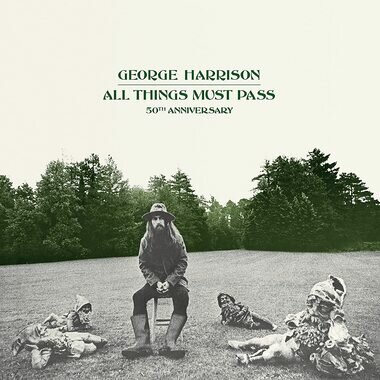
singles chart with &#8220;My Sweet Lord.&#8221; The song from his album&nbsp;<i>All Things Must Pass&nbsp;</i>stayed at No.1 for five weeks and made Harrison the first solo Beatle to
have a No.1. The track returned to the top of the UK charts in 2002, following
his death.</p>

<p>Many critics say
that his 1970 triple album <i>All Things Must Pass</i> is the finest solo
Beatles effort and truly established Harrison as an equal to Lennon and
McCartney. But the success of the song was marred by a long-running legal
battle which in 1976 saw Harrison being found guilty of 'subconscious plagiarism' of the Ronnie
Mack song &#8220;He's So Fine.&#8221; Earnings from the song were awarded to Mack's estate;
the Chiffons, who had scored a hit with &#8220;He's So Fine&#8221; in the early '60s, then
recorded their own version of &#8220;My Sweet Lord.&#8221;</p>

<p>By the end of the
Beatles, George had accumulated hundreds of songs, many of which found a home
on <i>All Things Must Pass</i>. &#8220;My Sweet Lord&#8221; was originally intended for Billy Preston.</p>

<a href="http://www.themortonreport.com/my-sweet-lord0.jpg"><img alt="my-sweet-lord0.jpg" src="http://www.themortonreport.com/assets_c/2012/02/my-sweet-lord0-thumb-249x251-15172.jpg" width="249" height="251" class="mt-image-right" style="float: right; margin: 0 0 20px 20px;"></img></a><p>In December, 1969, George
was playing in Copenhagen, Denmark with Delaney and Bonnie and Friends. Billy
Preston was part of that group. Harrison told the court that the song that
became "My Sweet Lord" was conceived when he slipped away from a
press conference and began "vamping" some guitar chords, fitting the
chords to the words "hallelujah" and "hare Krishna." Later,
members of the band joined in and lyrics were developed.</p>

<p>Upon returning to
London, a few weeks later, Preston went into the studio to make an album, with
Harrison producing. The unfinished "My Sweet Lord" was brought up,
and was worked into a finished version. This recording was issued by Apple
Records, and a "lead sheet" containing the melody, words, and harmony was submitted for the United States copyright application. George then
later recorded his own version of the song during the <i>All Things Must Pass</i>
sessions. </p>

<p>In an interview
published in the November 27, 1992 issue of <i>Goldmine</i> magazine, Harrison
stated that the events that occurred during the litigation of a claim that he
had plagiarized the melody for "My Sweet Lord" would fill a book.</p>

<p>At that trial, the judge
was called upon to make an analysis of the music of both &#8220;He&#8217;s So Fine&#8221; and &#8220;My
Sweet Lord,&#8221; and Harrison himself testified about the process that occurred in
writing his song. The Court noted that &#8220;He&#8217;s So Fine&#8221; incorporated two basic
musical phrases, which were called "motif A" and "motif B." Motif A consisted of four repetitions of the notes G-E-D, while B was G-A-C-A-C. The experts for each party agreed that this was a highly
unusual pattern.</p>

<p>The judge said it was
"perfectly obvious that the two songs were virtually identical," but
was convinced that neither Harrison nor Preston consciously set out to
appropriate the melody. Harrison conceded that he had heard &#8220;He&#8217;s So Fine&#8221;
prior to writing &#8220;My Sweet Lord,&#8221; and therefore, his subconscious knew the
combination of chords in the song.</p>

<p>The Chiffons did a fine
version of the Harrison classic and some would say Harrison had done the same! Around
the time that the ruling was handed down Harrison himself stated,
"99% of popular music that can be heard is reminiscent of something or
other."</p>

 
<object width="380" height="320"><param name="movie" value="http://www.youtube.com/v/wynYMJwEPH8?version=3&amp;hl=en_US"><param name="allowFullScreen" value="true"><param name="allowscriptaccess" value="always"><embed src="http://www.youtube.com/v/wynYMJwEPH8?version=3&amp;hl=en_US" type="application/x-shockwave-flash" allowscriptaccess="always" allowfullscreen="true" width="380" height="320"></embed></param></param></param></object>]]>
        
    </content>
</entry>

<entry>
    <title>This Day in Music, February 21: Sail On, Silver Girl</title>
    <link rel="alternate" type="text/html" href="http://www.themortonreport.com/entertainment/music/this-day-in-music-21st-february-sail-on-silvergirl/" />
    <id>tag:www.themortonreport.com,2012://1.3039</id>

    <published>2012-02-21T05:00:00Z</published>
    <updated>2012-02-20T23:00:12Z</updated>

    <summary>On this day in 1970, Simon and Garfunkel went to No.1 on the UK chart with Bridge Over Troubled Water. The album went on to stay on the chart for over 300 weeks, returning to the top of the charts on eight separate occasions and spending a total of 41 weeks at No.1</summary>
    <author>
        <name>Neil Cossar</name>
        <uri>http://www.thisdayinmusic.com/</uri>
    </author>
    
        <category term="Entertainment" scheme="http://www.sixapart.com/ns/types#category" />
    
        <category term="Featured Columns" scheme="http://www.sixapart.com/ns/types#category" />
    
        <category term="Music" scheme="http://www.sixapart.com/ns/types#category" />
    
        <category term="This Day In Music" scheme="http://www.sixapart.com/ns/types#category" />
    
    <category term="bridgeovertroubledwater" label="Bridge Over Troubled Water" scheme="http://www.sixapart.com/ns/types#tag" />
    <category term="grammys" label="Grammys" scheme="http://www.sixapart.com/ns/types#tag" />
    <category term="simonandgarfunkel" label="Simon and Garfunkel" scheme="http://www.sixapart.com/ns/types#tag" />
    
    <content type="html" xml:lang="en" xml:base="http://www.themortonreport.com/">
        <![CDATA[


<p>On this day
in 1970, Simon and Garfunkel went to No.1 on the UK chart with <i>Bridge Over Troubled Water</i>. The album
went on to stay on the chart for over 300 weeks, returning to the top of the
charts on eight separate occasions and spending a total of 41 weeks at No.1. </p>

<p>It&#8217;s one of
those songs, isn&#8217;t it? A timeless classic which can still, to this day, send a
shiver down the spine. The single won the Grammy Award for Record of the Year
and Song of the Year in 1971.</p>

<p>Paul Simon
wrote the song while his partner Art Garfunkel was filming in Europe for the
black comedy <i>Catch-22 </i>that starred Alan Arkin. The duo were coming to the end
of their relatively short career, tensions were high, and by the time their fifth and final studio album was in the charts, Simon and
Garfunkel were no longer.</p>

<p>Paul
Simon told <i>Rolling Stone</i> in 1972 that he now&nbsp;regrets
his insistence that Art Garfunkel sing this song as a solo, as it focused
attention on Garfunkel and relegated Simon to a secondary position. Art
initially did not want to sing the lead vocal, feeling it was not right for
him, stating that Simon should have sung the song. But after all these years,
as a listener, you can&#8217;t imagine anyone else but Art singing this beautiful
song.&nbsp;</p>

<p>When
Simon first presented the song to Garfunkel it had just two verses and the
singer suggested Simon pen another verse, which he did. The final verse was written about Simon's
then-wife Peggy Harper, who had noticed her first gray hairs, inspiring the
line, "Sail on, silver girl." The first two verses had been recorded
in New York and the final new verse was laid down in a studio in Los Angles.</p>

<p>Simon has
also said he took inspiration from the Swan Silvertones' 1958 song "Mary
Don't You Weep," which includes the line "I'll be your bridge over
deep water if you trust in me."</p>

<p><a href="http://www.themortonreport.com/51CJKCH4SWL._SL500_AA300_.jpg"><img alt="51CJKCH4SWL._SL500_AA300_.jpg" src="http://www.themortonreport.com/assets_c/2012/02/51CJKCH4SWL._SL500_AA300_-thumb-250x250-15149.jpg" class="mt-image-left" style="float: left; margin: 0 20px 20px 0;" height="250" width="250"></img></a>So many
great artists have recorded the song. Aretha Franklin saw her version reach
No.1 on the US R&amp;B chart. The Supremes, Dionne Warwick, The Jackson 5,
Roberta Flack, and Whitney Houston all delivered their own soulful versions.</p>

<p>Arguably
the most famous cover of the song was by Elvis Presley, who recorded it in
Nashville in 1970 for his album <i>That's
The Way It Is</i>. The song became a permanent fixture in his sets in Las
Vegas. During one season in Vegas, Paul Simon attended one of the shows, and,
after seeing Elvis perform the song, was reported to have said, "That's
it, we might as well all give up now."</p>

<p>Presley
continued to use this song throughout all his live performances, including his
final live appearance in Indianapolis on June 26, 1977.</p>

<p><i>Bridge Over Troubled Water</i> has since sold over 25 million copies
worldwide making it one of the best selling albums of all-time and I&#8217;m not surprised.
Along with the title track, other classics on the album include &#8220;The Boxer,&#8221;
&#8220;The Only Living Boy in New York,&#8221; &#8216;Cecilia,&#8221; and &#8220;El Condor Pasa (If I
Could)&#8221;.</p>

<p>So the duo who had
started life known as Tom &amp; Jerry in 1957 bowed out on an almighty high,
but like all great stars, they returned &#8212;
their 1981 Concert in New York's Central Park attracted more than 500,000
people, making it the seventh most highly attended concert in the history of music. <br /></p><p>And
what of Tom and Jerry? Well, we all know the story: Art went off and did a bit
of acting and made a few solo records and Mr Simon went on to make some of the
finest albums of the '80s and is still making great records today.&nbsp;</p>

 
<object height="320" width="380"><param name="movie" value="http://www.youtube.com/v/C-PNun-Pfb4?version=3&amp;hl=en_US"><param name="allowFullScreen" value="true"><param name="allowscriptaccess" value="always"><embed src="http://www.youtube.com/v/C-PNun-Pfb4?version=3&amp;hl=en_US" type="application/x-shockwave-flash" allowscriptaccess="always" allowfullscreen="true" height="320" width="380"></embed></param></param></param></object>]]>
        
    </content>
</entry>

<entry>
    <title>This Day in Music, February 20: Highway to Hell</title>
    <link rel="alternate" type="text/html" href="http://www.themortonreport.com/entertainment/music/this-day-in-music-february-20-highway-to-hell/" />
    <id>tag:www.themortonreport.com,2012://1.3036</id>

    <published>2012-02-20T05:00:00Z</published>
    <updated>2012-02-20T01:09:24Z</updated>

    <summary>On this day in 1980, Bon Scott, singer of AC/DC, was pronounced dead on arrival at a London hospital after a heavy night&#8217;s drinking. Scott was found in the passenger seat of a friend&#8217;s parked car.</summary>
    <author>
        <name>Neil Cossar</name>
        <uri>http://www.thisdayinmusic.com/</uri>
    </author>
    
        <category term="Entertainment" scheme="http://www.sixapart.com/ns/types#category" />
    
        <category term="Featured Columns" scheme="http://www.sixapart.com/ns/types#category" />
    
        <category term="Music" scheme="http://www.sixapart.com/ns/types#category" />
    
        <category term="This Day In Music" scheme="http://www.sixapart.com/ns/types#category" />
    
    <category term="acdc" label="ac/dc" scheme="http://www.sixapart.com/ns/types#tag" />
    <category term="bonscott" label="bon scott" scheme="http://www.sixapart.com/ns/types#tag" />
    <category term="highwaytohell" label="highway to hell" scheme="http://www.sixapart.com/ns/types#tag" />
    
    <content type="html" xml:lang="en" xml:base="http://www.themortonreport.com/">
        <![CDATA[<p>On this day in 1980, Bon Scott, singer of
AC/DC, was pronounced dead on arrival at a London hospital after a heavy
night&#8217;s drinking. Scott was found in the passenger seat of a friend&#8217;s parked
car in East Dulwich, South London. The official coroner&#8217;s report stated that he
had drunk himself to death, eventually "suffocating on his own vomit."</p>

<p>It&#8217;s a tough call knowing
which way to turn after you lose your friend and band member. Zeppelin
decided to call it a day after the death of their drummer John Bonham, who was
found dead at guitarist Jimmy Page's house during band rehearsals. Jimi Hendrix went in a similar way, as have
many other musicians. In the July 2004 issue of <i>Classic Rock</i>, Scott was rated
as number one in a list of the "100 Greatest Frontmen Of All Time" ahead
of Freddie Mercury and Robert Plant, which just shows how much respect and
admiration Scott has gained over the years since his untimely demise.</p>

<p>Like his future
band mates Angus and Malcolm Young, Scott was born in Scotland; his family emigrated
to Australia in 1952 along with thousands of other Brits who were tempted by a
new life down under. The Scotts settled in Freemantle in Western Australia. His
father, who worked as a baker, was also a keen piper and through this a young
Scott started his musical career as a drummer in a bagpipe band. He continued
with this until he was 17 when he won a Novice Champion for his drumming.</p>

<p>After working as a
postman, bartender, and truck packer, Scott formed his first band, The Spektors,
in 1964 where he played drums and also sang. A couple of years later he formed
The Valentines who had a local hit with a song called "Every Day I Have To
Cry". During this period, The Valentines supported The Easybeats, where Bon
met George Young, the elder brother of Angus and Malcolm Young, whom he would
later join in AC/DC.</p>

<p>Scott's next group,
Fraternity, found themselves opening shows for British groups Deep Purple, Free,
and Black Sabbath as they toured Australia. Bon's life as a musician was taking
shape. In 1972 he toured the UK where they opened for Status Quo. The Oz band
changed their name to Fang where they also found themselves supporting
Geordie, who ironically featured singer Brian Johnson. Two years later and back
in Australia, Scott was offered the job as lead singer with AC/DC who had just
sacked their singer.</p>

<p>During the next four
years AC/DC worked nonstop, sometimes playing three gigs in one day. The group
played everywhere and anywhere in Australia as well as touring Europe and the
US, gaining cult status as one of the best new hard rock bands on the planet.
Their 1979 album <i>Highway to Hell</i> reached the top 20 in the United
States, and the band seemed on the verge of a commercial breakthrough. However,
on 19 February 1980, Scott died after a night out in London.</p>

<p>Scott, who was just 33
at the time, passed out after a night of heavy drinking at the Music Machine in
London. He was left to sleep in a Renault 5 owned by his friend Alistair
Kinnear, at 67 Overhill Road in East Dulwich, South London. The following
afternoon, Kinnear found Scott lifeless, and alerted the authorities. Scott was
rushed to King's College Hospital in Camberwell, where he was pronounced dead
on arrival. Pulmonary aspiration of vomit was the cause of Scott's death, and
the official cause was listed as "acute alcohol poisoning" and
"death by misadventure." Scott was cremated and his ashes were
interred by his family at Fremantle Cemetery in Fremantle, Western Australia.</p>

<p>AC/DC briefly
considered disbanding, but the group quickly recruited vocalist Brian Johnson
of the British glam rock band Geordie. AC/DC's subsequent album, <i>Back in Black</i>,
was released only five months later, and was a tribute to Scott. It went on to
become the third best-selling album in history, behind Pink Floyd's <i>Dark Side of The Moon</i>, and Michael
Jackson's <i>Thriller</i>.</p>

<p>Scott never saw or
enjoyed the success that AC/DC went on to achieve, unlike
Hendrix, Morrison, and Bonham, who all died too young, but lived long enough to
enjoy some fame and fortune. Mr Scott, we salute you.</p>


<object height="320" width="380"><param name="movie" value="http://www.youtube.com/v/ecOJblWbGKg?version=3&amp;hl=en_US"><param name="allowFullScreen" value="true"><param name="allowscriptaccess" value="always"><embed src="http://www.youtube.com/v/ecOJblWbGKg?version=3&amp;hl=en_US" type="application/x-shockwave-flash" allowscriptaccess="always" allowfullscreen="true" height="320" width="380"></embed></param></param></param></object>
]]>
        
    </content>
</entry>

<entry>
    <title>This Day in Music, February 7: Thriller</title>
    <link rel="alternate" type="text/html" href="http://www.themortonreport.com/entertainment/music/this-day-in-music-february-7-thriller/" />
    <id>tag:www.themortonreport.com,2012://1.3008</id>

    <published>2012-02-07T05:00:00Z</published>
    <updated>2012-02-07T02:34:43Z</updated>

    <summary>On 7 February 2005, Michael Jackson&apos;s &quot;Thriller&quot; was named the top pop video in a poll of Channel 4 viewers in the UK, beating out Madonna, Nirvana, and Queen among others.</summary>
    <author>
        <name>Neil Cossar</name>
        <uri>http://www.thisdayinmusic.com/</uri>
    </author>
    
        <category term="Entertainment" scheme="http://www.sixapart.com/ns/types#category" />
    
        <category term="Featured Columns" scheme="http://www.sixapart.com/ns/types#category" />
    
        <category term="Music" scheme="http://www.sixapart.com/ns/types#category" />
    
        <category term="This Day In Music" scheme="http://www.sixapart.com/ns/types#category" />
    
    <category term="johnlandis" label="John Landis" scheme="http://www.sixapart.com/ns/types#tag" />
    <category term="michaeljackson" label="Michael Jackson" scheme="http://www.sixapart.com/ns/types#tag" />
    <category term="mtv" label="MTV" scheme="http://www.sixapart.com/ns/types#tag" />
    <category term="thriller" label="Thriller" scheme="http://www.sixapart.com/ns/types#tag" />
    
    <content type="html" xml:lang="en" xml:base="http://www.themortonreport.com/">
        <![CDATA[<p>On February 7, 2005, Michael Jackson's &#8220;Thriller&#8221; was named the
top pop video in a poll of Channel 4 viewers in the UK. The 1983 video, which
depicts the singer as a werewolf and a zombie, beat videos by Madonna and
Robbie Williams. Animated videos for Peter Gabriel's &#8220;Sledgehammer&#8221; and A-Ha's
&#8220;Take On Me&#8221; were in second and third place respectively. In fourth place was Queen with
&#8220;Bohemian Rhapsody,&#8221; fifth was Madonna's "Like a Prayer," sixth was Robbie Williams' &#8220;Rock
DJ,&#8221; seventh was Michael Jackson's &#8220;Billie Jean,&#8221; eighth was The Verve with &#8220;Bittersweet
Symphony,&#8221; ninth was Madonna's &#8220;Vogue,&#8221; and Nirvana's &#8220;Smells Like Teen Spirit&#8221; was tenth.<br /></p>

<p>But back to "Thriller"... I&#8217;m not surprised it came top of the list. This groundbreaking 14-minute
masterpiece broke the mold for music videos. In 1983 when MTV was just two years old and
videos cost around $100,000 to produce. "Thriller" was shot on a unprecedented budget of $500,000 &#8212; in just four days.</p>

<p>Directed by
John Landis, who also wrote the screenplay with Jackson, "Thriller" has continually been voted the most influential pop music video
of all time.</p>

<p>Not wishing to take
anything away from the plot, it has been said it is very close to Landis&#8217; work <i>An American Werewolf in London</i>, which I
guess the singer must have seen and liked. Jackson and his girlfriend run out
of gas in dark woods where they do what everyone in the movies does &#8212; walk off deeper
into the forest (go back, don&#8217;t do it!). Jackson asks her if she would like to
be his girlfriend, she says yes, and as he&#8217;s giving her a ring (he&#8217;s a fast
worker), a full moon appears, and Michael begins convulsing in agony &#8212; transforming
into a horrifying werewolf-type thing.</p>

<p>The scene
then cuts to a movie theater where Michael and his date are actually watching
the scene unfold in a fictional Vincent Price movie titled <i>Thriller</i>. The couple then leave the theater and walk down a foggy
road as Michael teases her by singing the verses of "Thriller." They
pass a nearby graveyard, in which the undead begin to rise out of their graves.</p>

<p>At the time of filming the 25-year-old singer weighed just 99 lbs and had
a 26-inch waist. Ola Ray, who co-stars with Jackson, was a former <i>Playboy</i> centerfold
(she was the Playmate of the Month for the June 1980 issue). She has since stated
in interviews that she tried not to let Jackson know about her <i>Playboy</i> history,
because she wanted the part. Ray went on to appear in over ten films including <i>48 hours, Beverly Hills Cops II</i>, and <i>Fear City.</i></p>

<p>Apparently the biggest selling and most influential video of all time
was almost not released. Jackson, a strict Jehovah&#8217;s Witness, was told he would
be shunned if he went ahead with the film. After much discussion, a disclaimer at
the start of the film by Jackson stated: "Due to my strong personal convictions, I wish to
stress that this film in no way endorses a belief in the occult."</p>

<p>I remember seeing &#8220;Thriller&#8221; for the first
time and, like everyone else, I was blown away by the filming, the dancing, the story,
the song! Once again Michael Jackson had outdone every other act. Jackson later
stated that he wanted to make something special to keep his latest album at the
top of the charts. Well, he did that all right.</p>

 
<object height="315" width="380"><param name="movie" value="http://www.youtube.com/v/sOnqjkJTMaA?version=3&amp;hl=en_US"><param name="allowFullScreen" value="true"><param name="allowscriptaccess" value="always"><embed src="http://www.youtube.com/v/sOnqjkJTMaA?version=3&amp;hl=en_US" type="application/x-shockwave-flash" allowscriptaccess="always" allowfullscreen="true" height="315" width="380"></embed></param></param></param></object>]]>
        
    </content>
</entry>

<entry>
    <title>This Day in Music, February 6: Jamming in Trench Town </title>
    <link rel="alternate" type="text/html" href="http://www.themortonreport.com/entertainment/music/this-day-in-music-february-6-jamming/" />
    <id>tag:www.themortonreport.com,2012://1.3006</id>

    <published>2012-02-06T16:30:00Z</published>
    <updated>2012-02-06T17:29:10Z</updated>

    <summary>As a musician and spokesperson for his generation, Bob Marley had the political drive of John Lennon, the poetic side of Bob Dylan, and a groove coupled with hypnotic melodies that was unmistakably his own.</summary>
    <author>
        <name>Neil Cossar</name>
        <uri>http://www.thisdayinmusic.com/</uri>
    </author>
    
        <category term="Entertainment" scheme="http://www.sixapart.com/ns/types#category" />
    
        <category term="Featured Columns" scheme="http://www.sixapart.com/ns/types#category" />
    
        <category term="Music" scheme="http://www.sixapart.com/ns/types#category" />
    
        <category term="This Day In Music" scheme="http://www.sixapart.com/ns/types#category" />
    
    <category term="bobmarley" label="bob marley" scheme="http://www.sixapart.com/ns/types#tag" />
    <category term="jamaicanmusic" label="jamaican music" scheme="http://www.sixapart.com/ns/types#tag" />
    <category term="reggae" label="reggae" scheme="http://www.sixapart.com/ns/types#tag" />
    <category term="ska" label="ska" scheme="http://www.sixapart.com/ns/types#tag" />
    <category term="thewailers" label="the wailers" scheme="http://www.sixapart.com/ns/types#tag" />
    
    <content type="html" xml:lang="en" xml:base="http://www.themortonreport.com/">
        <![CDATA[<p>Born on
this day in 1945, Bob Marley, singer/songwriter and
guitarist who had the 1981 UK No.8 single with &#8220;No Woman No Cry&#8221;, plus over ten
other UK Top 40 singles and the 1976 US No.8 &amp; UK No.15 album <i>Rastaman Vibration</i>. The 1984 <i>Best Of</i> album spent 330 weeks on the UK
chart. </p>

<p>Marley&#8217;s
influence is unparalleled, irrespective of race, colour or creed. He is
credited with helping spread both Jamaican music and the Rastafarian movement to
a worldwide audience.</p>

<p>Bob Marley
was born Robert Nesta Marley on February 6, 1945, to 50-year-old white
quartermaster Captain Norval Marley of the British West Indian Regiment and an 18-year-old black Jamaican woman, Cedella Malcolm (the last time Marley
saw his father was when he was five years old). He grew up in Trench Town in
squatter settlements that housed a minimum of four families. The teenage Marley
quickly learned to defend himself against Trench Town's rude boys and bad men.
Bob's street-fighting skills earned him the respectful nickname Tuff Gong.</p>

<p>Trench Town
was also a culturally rich community where Bob Marley's abundant musical
talents were nurtured. A lifelong source of inspiration, Bob immortalized
Trench Town in his songs "No Woman No Cry", "Trench Town
Rock", and "Trench Town".</p>

<p>By the
early 1960s the island's music industry was beginning to take shape, and its
development gave birth to an indigenous Jamaican music form called ska.
A local interpretation of American soul and R&amp;B, ska exerted a widespread influence on poor Jamaican
youth while offering a welcomed escape from their otherwise harsh realities.</p>

<p>Marley
became friends with Neville "Bunny" Livingston (later known as Bunny
Wailer), and later, at the age of 16, Bob met another aspiring singer,
Desmond Dekker, who introduced him to another young singer, Jimmy Cliff,
the future star of the Jamaican film <i>The
Harder They Come</i>, who, at age 14, had already recorded a few hit songs. In
1962 Cliff introduced Marley to producer Leslie Kong; Marley cut his first
singles for Kong: "Judge Not", "Terror" and "One More
Cup of Coffee", a cover of the million-selling country hit by Claude Gray.
All these failed to sell but Marley was now a full-time musician.</p>

<p>In 1963,
Marley, Bunny Wailer, Peter Tosh, Junior Braithwaite, Beverley Kelso, and
Cherry Smith formed a ska and rocksteady group, calling themselves "The
Teenagers". They later changed their name to "The Wailing
Rudeboys" then to "The Wailing Wailers" (at which point they
were discovered by record producer Coxsone Dodd), and finally to "The
Wailers".</p>

<p>The
Wailers recorded demos, toured the UK, and signed a deal with CBS records, which
was short lived. It was Island Records founder and producer Chris Blackwell who
eventually paid for studio time for the musicians, who delivered the album <i>Catch A Fire</i> which was released in 1973 and immediately earned
worldwide acclaim.</p>

<p>The
hits followed: "Jamming," "Waiting in Vain,&#8221; "One
Love/People Get Ready", "I Shot the Sheriff", &#8220;No Woman No Cry&#8221;.</p>

<p>In July
1977, Marley was found to have a type of malignant melanoma under the nail of
one of his toes. Marley turned down doctors' advice to have his toe amputated,
citing his religious beliefs. The final concert of Marley's career was held
September 23, 1980 at the Stanley Theatre in Pittsburgh, Pennsylvania. Shortly after, Marley's health deteriorated
and he became very ill; the cancer had spread throughout his body.</p>

<p>He died
at Cedars of Lebanon Hospital in Miami on the morning of May 11, 1981, at the
age of 36.</p>

<p>In December
1999, his 1977 album <i>Exodus</i> was named
Album of the Century by <i>Time</i> magazine
and his song "One Love" was designated Song of the Millennium by the
BBC. Since its release in 1984, Marley's <i>Legend</i>
compilation has annually sold over 250,000 copies according to Nielsen Sound
Scan, and has now sold over 10 million copies worldwide. In 1990, February 6 was
proclaimed a national holiday in Jamaica to commemorate his birth.</p>

<p>As a
musician and spokesperson for his generation, Bob Marley had the political
drive of John Lennon, the poetic side of Bob Dylan, and a groove coupled with
hypnotic melodies that was unmistakably his own.</p>

 ]]>
        
    </content>
</entry>

<entry>
    <title>This Day in Music, February 3: The Day the Music Died</title>
    <link rel="alternate" type="text/html" href="http://www.themortonreport.com/entertainment/music/this-day-in-music-february-3-the-day-the-music-died/" />
    <id>tag:www.themortonreport.com,2012://1.2997</id>

    <published>2012-02-03T05:00:00Z</published>
    <updated>2012-02-03T01:01:37Z</updated>

    <summary>On this day in 1959, 22-year-old Buddy Holly, the Big Bopper, and Ritchie Valens, aged 17, died in a plane crash shortly after takeoff from Clear Lake, Iowa.</summary>
    <author>
        <name>Neil Cossar</name>
        <uri>http://www.thisdayinmusic.com/</uri>
    </author>
    
        <category term="Entertainment" scheme="http://www.sixapart.com/ns/types#category" />
    
        <category term="Featured Columns" scheme="http://www.sixapart.com/ns/types#category" />
    
        <category term="Music" scheme="http://www.sixapart.com/ns/types#category" />
    
        <category term="This Day In Music" scheme="http://www.sixapart.com/ns/types#category" />
    
    <category term="buddyholly" label="buddy holly" scheme="http://www.sixapart.com/ns/types#tag" />
    <category term="ritchievalens" label="ritchie valens" scheme="http://www.sixapart.com/ns/types#tag" />
    <category term="thebigbopper" label="the big bopper" scheme="http://www.sixapart.com/ns/types#tag" />
    <category term="thedaythemusicdied" label="the day the music died" scheme="http://www.sixapart.com/ns/types#tag" />
    
    <content type="html" xml:lang="en" xml:base="http://www.themortonreport.com/">
        <![CDATA[<p>On this day in 1959, 22-year-old Buddy Holly, the Big Bopper, and Ritchie Valens, aged 17, died in a plane crash shortly after takeoff from Clear Lake, Iowa. The pilot of the single-engine Beechcraft Bonanza was also killed. Holly hired the plane after heating problems developed on his tour bus. All three were traveling to Fargo, North Dakota, for the next show on their Winter Dance Party Tour which Holly had planned to make money after the break-up of his band, The Crickets, in the previous year.</p>

<p>The Winter Dance Party Tour was planned to cover 24 cities in just three weeks and Holly would be the biggest headliner. Waylon Jennings, a friend from Lubbock, Texas, and Tommy Allsup joined the tour as backup musicians. Ritchie Valens, probably the hottest of the artists at the time, The Big Bopper, and Dion and the Belmonts made up the list of other performers.</p>

<p>The grueling tour schedule had taken the acts to the Surf Ballroom in Clear Lake, Iowa the previous night. Due to mechanical difficulty with their chartered bus, the group arrived at Surf Ballroom less than two hours before the performance. The ballroom was packed with over 1500 fans, many of whom had driven hundreds of miles on snow-covered roads to see the stars perform.</p>

<p><a href="http://www.themortonreport.com/the_day_the_music_died.jpg"><img alt="the_day_the_music_died.jpg" src="http://www.themortonreport.com/assets_c/2012/02/the_day_the_music_died-thumb-256x227-14881.jpg" class="mt-image-right" style="float: right; margin: 0 0 20px 20px;" height="227" width="256"></img></a>Buddy was fed up with the chartered bus with its faulty heater, so before the performance he asked the Surf manager Carroll Anderson about renting a chartered plane to fly him to his next destination in Moorhead, Minnesota. Anderson knew the owner of Dwyer Flying Service in nearby Mason City whom he contacted to arrange the flight. Anderson was not able to get hold of the owner so he called one of the pilots, Roger Peterson, who agreed to take Buddy plus two others to Moorhead. </p>

<p>After the performance, the group got ready to travel to their next show on the tour bus. Holly boarded the 1947 Beechcraft Bonanza aircraft to Fargo, North Dakota, the nearest airport to Moorhead. Two other members of the group had the option to fly with him at $36 per person. Dion didn&#8217;t want to pay, but Waylon Jennings was keen to fly with Buddy, but
exchanged his seat with J.P. Richardson because he had a cold. Tommy Allsup was
included in the group, but Ritchie Valens offered to flip him for the seat since he was ill. The local host of the Winter Dance Party, Bob Hale, flipped the coin. Ritchie called heads and won the toss. Years later, Tommy Alsup would open a dance club named the Heads Up Saloon to commemorate this life-saving coin toss.</p>

<p>In his 1996 autobiography, Waylon Jennings stated that he was disappointed that he had to ride in the freezing bus, so his parting remark to Buddy was, "I hope your damn plane crashes!" Jennings said this remark has haunted him ever since
then.</p>

<p>The plane took off around 1:00 AM from Mason City Airport into a blinding snowstorm and crashed only minutes later in a cornfield, killing all three musicians and the pilot. Because the plane didn't catch fire when it crashed, no one noticed the wreckage until the next day, about a quarter mile from the nearest country road.</p>

<p>Early reports from the scene suggest the aircraft spun out of control during a light snowstorm. Only the pilot's body was found inside the wreckage as the performers were thrown clear on impact.</p>

<p>The Civil Aeronautics Board concluded that the primary cause of the crash was pilot error due to the 21-year-old Peterson's inability to accurately interpret the newly installed Sperry F3 attitude indicator, which he was forced to rely upon in the poor weather conditions. The theory was that Peterson may have read the gyroscope backwards as a result of vertigo and thought that the plane was gaining altitude when it was actually descending.</p>

<p>Buddy Holly&#8217;s body was buried a few days later on 7 February. Services were held in Lubbock, Texas, at the Tabernacle Baptist Church where over a thousand mourners attended the service. </p>

<p>In 1988, Buddy fan Ken Paquette built a monument to the singers, from stainless steel, and placed it at the crash site where the current owners of the land also planted four trees in memory of the victims. </p>

<p>Holly is often described as the most influential of the early rock and roll musicians, and has been cited as such by John Lennon and Paul McCartney (McCartney owns the publishing rights to Holly's catalog of songs). The death of Holly is now commonly referred to as "the day the music died" after Don McLean immortalised the tragedy with his 1972 hit &#8220;American Pie.&#8221; McLean has stated that he first learned about Buddy Holly's death while delivering newspapers on the morning of February 3, 1959, and in his song uses the line, "February made me shiver/with every paper I'd deliver."</p>

<object height="315" width="380"><param name="movie" value="http://www.youtube.com/v/0KKohj9NcXg?version=3&amp;hl=en_US"><param name="allowFullScreen" value="true"><param name="allowscriptaccess" value="always"><embed src="http://www.youtube.com/v/0KKohj9NcXg?version=3&amp;hl=en_US" type="application/x-shockwave-flash" allowscriptaccess="always" allowfullscreen="true" height="315" width="380"></embed></param></param></param></object>]]>
        
    </content>
</entry>

<entry>
    <title>This Day in Music, February 2: Wardrobe Malfunction!</title>
    <link rel="alternate" type="text/html" href="http://www.themortonreport.com/entertainment/music/this-day-in-music-february-2-wardrobe-malfunction/" />
    <id>tag:www.themortonreport.com,2012://1.2979</id>

    <published>2012-02-02T05:00:00Z</published>
    <updated>2012-02-02T01:50:24Z</updated>

    <summary>The irony of the whole episode known as Nipplegate is that, as we know, the media uses sex to sell everything&#8212;cars, sports, hotels, food, films, everything&#8212;but when an unexpected incident like this happens, everybody is up in arms. </summary>
    <author>
        <name>Neil Cossar</name>
        <uri>http://www.thisdayinmusic.com/</uri>
    </author>
    
        <category term="Entertainment" scheme="http://www.sixapart.com/ns/types#category" />
    
        <category term="Featured Columns" scheme="http://www.sixapart.com/ns/types#category" />
    
        <category term="Music" scheme="http://www.sixapart.com/ns/types#category" />
    
        <category term="This Day In Music" scheme="http://www.sixapart.com/ns/types#category" />
    
    <category term="janetjackson" label="janet jackson" scheme="http://www.sixapart.com/ns/types#tag" />
    <category term="superbowl" label="super bowl" scheme="http://www.sixapart.com/ns/types#tag" />
    <category term="wardrobemalfunction" label="wardrobe malfunction" scheme="http://www.sixapart.com/ns/types#tag" />
    
    <content type="html" xml:lang="en" xml:base="http://www.themortonreport.com/">
        <![CDATA[


<p>On this day in 2004, TV network CBS apologised for its broadcast of
the American Super Bowl after Janet Jackson was left exposed when Justin
Timberlake ripped her top. The pair had been performing a raunchy halftime
duet when one of Jackson's breasts was exposed as Timberlake pulled at her top. <br /></p><p>CBS quickly cut away from the scene but was still flooded with calls from angry
viewers about the halftime entertainment, produced by MTV. Timberlake insisted
it had been an accident, saying, "I am sorry that anyone was offended by the
wardrobe malfunction during the half-time performance of the Super Bowl."</p>

<p>I&#8217;d never
heard the expression "wardrobe malfunction" up until then. Now everybody was
using it. So was it an accident or a brilliant publicity stunt? And you might have known a member of the Jackson family was involved!</p>

<p>The irony of the whole
episode known as Nipplegate is that, as we know, the media uses sex to sell <i>everything&#8212;</i>cars, sports, hotels, food, films,
everything&#8212;but when an unexpected incident like this happens, everybody is up
in arms. And do you know how long that breast was exposed? Nine-sixteenths
of a second.</p>

<p>An estimated 140 million
people were watching the show when, at the end, pop star Justin Timberlake
popped off part of Jackson's corset. Janet
explained that her red bra was supposed to remain after Justin pulled off the
leather cover; her breast wasn't supposed to show. Jackson later explained
that the decision to have a costume reveal at the end of her halftime show
performance was made after final rehearsals. The singer also apoligised, saying,
&#8220;MTV was completely unaware of it. It was not my intention that it go as far as
it did. I apologize to anyone offended - including the audience, MTV, CBS and
the NFL."</p>

<p>Users of TiVo, the digital video recorder system that lets viewers pause
and "rewind" live television broadcasts, apparently couldn't get
enough of the fashion fiasco, a spokesperson said. "The audience measurement guys have never seen
anything like it, the reaction charts looked like an electrocardiogram," making the moment the most re-watched ever during a broadcast.</p>

<p>In 2001, a US appeals
court upheld its earlier decision throwing out a $550,000 indecency fine
against CBS Corp for the split-second exposure.</p>

<p>The US Court of Appeals
in Philadelphia ruled in 2008 that the fine should be voided because the US
Federal Communications Commission&#8217;s policy on indecency in broadcasting was
arbitrary. </p>

<p>A few weeks after the
event (and this could only happen in America), a woman filed a federal lawsuit
seeking billions of dollars for herself and "all Americans who watched the
halftime show" for their "outrage, anger, embarrassment and serious
injury". I'm not sure how far she got with that one.</p>

<p>Anyway, I feel sorry for
Justin Timberlake; he seems like such a nice young man. He put his musical career on hiatus to focus on
acting after the incident. He later stated that he "probably got 10
percent of the blame," explaining that "America's harsher on
women" and "unfairly harsh on ethnic people.&#8221;</p>

<p>And Janet, well, she&#8217;s
a Jackson, she&#8217;s alright. And do I think it was planned? No I don&#8217;t, but we&#8217;ll
never know, will we? <br /></p>


<object height="315" width="380"><param name="movie" value="http://www.youtube.com/v/dhNcXUm7Wq4?version=3&amp;hl=en_US"><param name="allowFullScreen" value="true"><param name="allowscriptaccess" value="always"><embed src="http://www.youtube.com/v/dhNcXUm7Wq4?version=3&amp;hl=en_US" type="application/x-shockwave-flash" allowscriptaccess="always" allowfullscreen="true" height="315" width="380"></embed></param></param></param></object>

]]>
        
    </content>
</entry>

<entry>
    <title>This Day in Music, February 1: From Despair to Where</title>
    <link rel="alternate" type="text/html" href="http://www.themortonreport.com/entertainment/music/this-day-in-music-february-1-from-despair-to-where/" />
    <id>tag:www.themortonreport.com,2012://1.2978</id>

    <published>2012-02-01T05:00:00Z</published>
    <updated>2012-02-01T03:27:20Z</updated>

    <summary>On this day in 1995, Richey Edwards, guitarist with the Manic Street Preachers, vanished, leaving no clues to his whereabouts.</summary>
    <author>
        <name>Neil Cossar</name>
        <uri>http://www.thisdayinmusic.com/</uri>
    </author>
    
        <category term="Entertainment" scheme="http://www.sixapart.com/ns/types#category" />
    
        <category term="Featured Columns" scheme="http://www.sixapart.com/ns/types#category" />
    
        <category term="Music" scheme="http://www.sixapart.com/ns/types#category" />
    
        <category term="This Day In Music" scheme="http://www.sixapart.com/ns/types#category" />
    
    <category term="manicstreetpreachers" label="manic street preachers" scheme="http://www.sixapart.com/ns/types#tag" />
    <category term="richeyedwards" label="richey edwards" scheme="http://www.sixapart.com/ns/types#tag" />
    
    <content type="html" xml:lang="en" xml:base="http://www.themortonreport.com/">
        <![CDATA[


<p>On this day in 1995, Richey Edwards, guitarist with the Manic Street
Preachers, vanished, leaving no clues to his whereabouts. He left the Embassy
Hotel in London at 7am, leaving behind his packed suitcase. His car was found
on the Severn Bridge outside Bristol, England 16 days later. Edwards has
never been found, despite constant searching, and in November 2008 he was
declared officially dead. </p>

<p>This
unsolved mystery of what did happen to Richey has never been resolved; many theories
abound but the facts are that no one knows what did happen to the guitarist on the first of February in '95.</p>

<p>Edwards
(often referred to as &#8216;James&#8217; during his years with the Manics)
grew up in Blackwood, Caerphilly in Wales, where he attended Oakdale
Comprehensive School. From 1986 to 1989, he attended the University of Wales in
Swansea and graduated with a 2:1 degree in political history. Edwards was initially a driver and roadie
for the Welsh group but he soon became accepted as the
band's main spokesman and fourth member.</p>

<p>On 15 May 1991, after a
gig at the Norwich Arts Centre in England,&nbsp;
Edwards made headlines &nbsp;following an argument with NME
journalist Steve Lamacq, who had questioned the Manics' authenticity and
values. He questioned Edwards' seriousness and commitment towards his art, and
Edwards responded by carving the words "4 Real" into his forearm with
a razor blade. The injury required 18 stitches. It
later transpired that Ritch had a history of self-harming, mainly through
stubbing cigarettes on his body, and occasionally cutting himself.</p>

<p>Edwards also suffered
severe bouts of depression in his adult life, and had been open about it in
interviews. "If you're hopelessly depressed like I was, then dressing up
is just the ultimate escape. When I was young I just wanted to be noticed.
Nothing could excite me except attention so I'd dress up as much as I could.&#8221;
After the release of the band's third album <i>The
Holy Bible</i>, he checked himself into the Priory psychiatric hospital,
forcing the band to appear as a three-piece at two major UK festivals, the Reading
Festival and T in the Park in Scotland.</p>

<p>Edwards'
final live appearance with the band was at the London Astoria, on 21
December 1994. The concert ended with the band infamously smashing their
equipment prompted by Edwards' destruction of his guitar towards the end of
set-closer "You Love Us."</p>

<p>On 1
February 1995, James and Manics singer James Dean Bradfield were due to fly to
the US on a promotional tour. As the mystery unfolded, events running up to this
day were noted: In the two weeks before his disappearance, Edwards withdrew
£200 a day from his bank account, which totalled £2800 by the day of the
scheduled flight.</p>

<p>He
checked out of the Embassy Hotel in Bayswater Road, London at seven in the
morning, and then drove to his apartment in Cardiff, Wales. In the two weeks
that followed he was apparently spotted in a passport office and a bus station,
both in Newport, Wales. On February 7, a taxi driver from Newport supposedly
picked up Edwards from the King's Hotel and drove him around the valleys,
including Blackwood (Edwards&#8217; home as a child). The passenger got off at the
Severn View service station.</p>

<p>On
February 14, Edwards' Vauxhall Cavalier received a parking ticket at the Severn
View service station and on February 17, the vehicle was reported as abandoned.
Police discovered the battery to be flat, with evidence that the car had been
lived in. Due to the service station's proximity to the Severn Bridge (which
has been a renowned suicide location in the past, sadly) it is widely believed
that he took his own life by jumping from the bridge.</p>

<p>Finally in
November, 2008 Richey's parents were granted a court order for him to be
declared presumed dead, despite alleged sightings all over the world many
believed to be Edwards &#8212; whose car was found near the Severn Bridge, where he
was thought to have taken his own life at the age of 27.</p>

 
<object height="315" width="380"><param name="movie" value="http://www.youtube.com/v/V6_TfAGPqKM?version=3&amp;hl=en_US"><param name="allowFullScreen" value="true"><param name="allowscriptaccess" value="always"><embed src="http://www.youtube.com/v/V6_TfAGPqKM?version=3&amp;hl=en_US" type="application/x-shockwave-flash" allowscriptaccess="always" allowfullscreen="true" height="315" width="380"></embed></param></param></param></object>]]>
        
    </content>
</entry>

<entry>
    <title>This Day in Music, January 31: God Save the Queen</title>
    <link rel="alternate" type="text/html" href="http://www.themortonreport.com/entertainment/music/this-day-in-music-31st-january-god-save-the-queen/" />
    <id>tag:www.themortonreport.com,2012://1.2977</id>

    <published>2012-01-31T05:00:00Z</published>
    <updated>2012-01-31T03:23:58Z</updated>

    <summary>For a group who only released one proper album, the Sex Pistols made one hell of an impact. Their timing was perfect. The media had a field day and couldn&apos;t keep those dirty little punks off the front pages of the papers.</summary>
    <author>
        <name>Neil Cossar</name>
        <uri>http://www.thisdayinmusic.com/</uri>
    </author>
    
        <category term="Entertainment" scheme="http://www.sixapart.com/ns/types#category" />
    
        <category term="Featured Columns" scheme="http://www.sixapart.com/ns/types#category" />
    
        <category term="Music" scheme="http://www.sixapart.com/ns/types#category" />
    
        <category term="This Day In Music" scheme="http://www.sixapart.com/ns/types#category" />
    
    <category term="godsavethequeen" label="god save the queen" scheme="http://www.sixapart.com/ns/types#tag" />
    <category term="sexpistols" label="sex pistols" scheme="http://www.sixapart.com/ns/types#tag" />
    
    <content type="html" xml:lang="en" xml:base="http://www.themortonreport.com/">
        <![CDATA[<p>Born on
this day in 1956, John Lydon (Johnny Rotten), singer with
the Sex Pistols, who had the 1977 UK No. 2 single &#8220;God Save The Queen&#8221; and 1977
UK No. 1 album <i>Never Mind The Bollocks
Here's The Sex Pistols</i>. </p>

<p>For a group
who only released one proper album, the Sex Pistols made one hell of an impact.
Their timing was perfect. The media had a field day and couldn&#8217;t keep those
dirty little punks off the front pages of the papers. The good citizens of the
British Isles were feeling patriotic; we were about to celebrate The Silver
Jubilee of Elizabeth II marking the 25th anniversary of Queen Elizabeth II's
accession to the throne. But these little buggers came along to ruin the whole
thing!</p>

<p>The Sex
Pistols made their live debut at St Martin&#8217;s School Of Art in central London in November 1975, supporting a band called Bazooka Joe, which included Stuart Goddard
(the future Adam Ant). We are told the Pistols&#8217; performance lasted 10 minutes.</p>

<p>On 4
June 1976 the Sex Pistols appeared at The Lesser Free Trade Hall in Manchester,
England. The now legendary night is regarded as a catalyst to the punk rock
movement. In the audience was: Morrissey, Bernard Sumner, Peter Hook (soon to
form Joy Division), and Mark E Smith (The Fall).</p>

<p>Future
Smiths singer Steve Morrissey later had a letter published in music magazine
<i>Record Mirror and Disc</i> asking the editor why the paper had not included any
stories on the Sex Pistols.</p>

<p>In October 1976, Sex Pistols signed to EMI records for £40,000 ($68,000). The contract was
terminated three months later with the label stopping production of the
&#8220;Anarchy In The UK&#8221; single and deleting it from its catalogue. EMI later issued
a statement saying it felt unable to promote the Sex Pistols' records in view of
the adverse publicity generated over the last few months.</p>

<p><a href="http://www.themortonreport.com/220px-Filthandfury.png"><img alt="220px-Filthandfury.png" src="http://www.themortonreport.com/assets_c/2012/01/220px-Filthandfury-thumb-220x272-14761.png" class="mt-image-right" style="float: right; margin: 0 0 20px 20px;" height="272" width="220"></img></a>On 1 December the Sex Pistols appeared on ITV's live early evening <i>Today</i> show (in place of Queen, who had pulled out following a trip
to the dentist by Freddie Mercury). Taunted by interviewer Bill Grundy, who
asked the band to say something outrageous, guitarist Steve Jones said, "You
dirty bastard...you dirty fucker...what a fucking rotter!" This was just what
the media wanted! Most of the British public were outraged and once again the
Pistols were all over the front of the papers.</p>

<p>On 10
March 1977, at 7am in the morning and on a trestle table set up outside
Buckingham Palace, the Sex Pistols signed to A&amp;M Records. The contract
lasted for six days. The Pistols were fired from A&amp;M due to pressure from
other label artists and its Los Angeles head office. Twenty-five thousand copies of &#8220;God Save the Queen&#8221; were pressed and the band made £75,000 ($127,500) from the deal.</p>

<p>Knowing
that someone had to put this record out, a brave Virgin Records came to the
rescue and signed The Sex Pistols.</p>

<p>And then at
last on 27 May 1977, the Sex Pistols' single &#8220;God Save the Queen&#8221;
was released in the UK. </p>

<p>It was banned
by TV and radio; high street shops and pressing plant workers refused to handle
the record. It sold 200,000 copies in one week and peaked at No. 2 on the UK
charts behind Rod Stewart's &#8220;I Don't Want to Talk About It&#8221;. It did however
reach No. 1 on the NME charts. There have been persistent rumours (never
confirmed or denied) that it was actually the biggest-selling single in the UK
at the time, and the British Phonographic Industry conspired to keep it off the
No. 1 slot.</p>

<p>And just to
rub salt into the &#8220;Jubilee&#8221; wounds, on 15 June the Sex Pistols
held a party on a boat as it sailed down the River Thames in London, where they
dropped anchor outside Houses of Parliament and performed &#8220;Anarchy In The
UK&#8221; as loud as humanly possible, resulting in members from the party being
arrested when the boat docked later that day.</p>

 
<object height="315" width="380"><param name="movie" value="http://www.youtube.com/v/8z2M_hpoPwk?version=3&amp;hl=en_US"><param name="allowFullScreen" value="true"><param name="allowscriptaccess" value="always"><embed src="http://www.youtube.com/v/8z2M_hpoPwk?version=3&amp;hl=en_US" type="application/x-shockwave-flash" allowscriptaccess="always" allowfullscreen="true" height="315" width="380"></embed></param></param></param></object>]]>
        
    </content>
</entry>

</feed>